
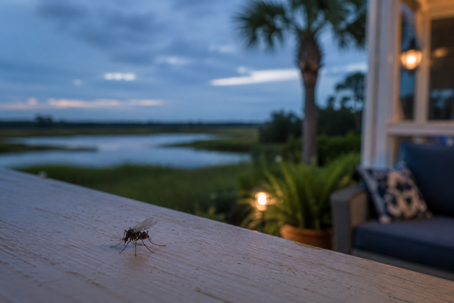
Biting Midge Season Is Coming to Saint Simons Island: What Homeowners Should Know
As August winds down on Saint Simons Island, most homeowners are still thinking about mosquitoes. But another tiny biting pest is about to become much more noticeable around the Georgia coast: biting midges.
Also called no-see-ums, sand gnats, or biting gnats, these insects are especially common around marshes, damp soil, shaded vegetation, and other coastal environments. They are much smaller than mosquitoes, but their bites can feel surprisingly intense. For homeowners around Saint Simons Island, Sea Island, Brunswick, Jekyll Island, and nearby marsh communities, late summer and fall can bring a noticeable increase in biting midge activity.
Understanding why they become more active, where they come from, and what homeowners can realistically do about them can make the transition into fall much more comfortable.
What Are Biting Midges?
Biting midges are tiny flies belonging to the Ceratopogonidae family. They are often called no-see-ums because many species are so small that they are difficult to see even while they are biting.
According to the University of Georgia Cooperative Extension, biting midges are typically only about 1/32 to 1/16 of an inch long. Despite their tiny size, their mouthparts can create painful bites that may leave red welts or irritation lasting for several days.
Only the females bite. Like mosquitoes, they use blood as a source of nutrients needed for egg development.
For coastal homeowners, the important part is where they breed. UGA notes that some biting midges develop in wet or damp areas rich in organic matter, including salt marshes and wet coastal soil. That makes Saint Simons Island an extremely favorable environment for them.
Why Saint Simons Island Has So Many No-See-Ums
Saint Simons is surrounded by exactly the type of habitat biting midges prefer.
Salt marshes, tidal creeks, damp soil, shaded vegetation, and humid coastal air all contribute to midge activity. Homes do not need to sit directly on the marsh to experience a problem. Adult midges can move from nearby breeding areas into yards, patios, pool areas, porches, and landscaped spaces.
Properties near Frederica, Sea Island Road, East Beach, Sea Palms, and other marsh-adjacent parts of the island may experience especially noticeable pressure, but no-see-ums can be found throughout Saint Simons.
The same environment that makes the Golden Isles beautiful also happens to provide excellent habitat for some remarkably annoying insects. Coastal living does insist on collecting its fee somehow.
Why Biting Midges Often Become More Noticeable in Fall
Biting midges can be present during much of the warm season, but homeowners often notice them more as summer begins transitioning into fall.
Several factors contribute to that pattern.
Warm temperatures continue well into fall on Saint Simons Island, allowing biting midges to remain active. At the same time, damp soil and marsh edges remain favorable breeding habitat, particularly after periods of rain and high tides.
Wind also matters. Tiny biting midges are weak flyers compared with mosquitoes. Breezier conditions can make it more difficult for them to move around and land on people. When evenings become calmer, their activity can suddenly seem much more intense.
That is why a pleasant, still fall evening near the marsh can sometimes turn into a no-see-um feeding frenzy just as homeowners are trying to enjoy their porch or patio.
How Can You Tell the Difference Between No-See-Ums and Mosquitoes?
Because both pests bite, homeowners sometimes assume every itchy welt came from a mosquito. There are a few clues that biting midges may be responsible instead.
No-see-ums are extremely small and can be difficult to see while they are biting. Their bites may feel sharp or burning and can leave clusters of tiny red marks. Mosquitoes are much larger and usually easier to see.
If you are getting bitten repeatedly but cannot see anything flying around you, especially near a marsh or during calm morning and evening hours, biting midges are a strong possibility.
Why Regular Window Screens May Not Stop Them
One particularly frustrating characteristic of no-see-ums is their size.
Some biting midges are small enough to pass through ordinary window or porch screening. The University of Georgia notes that certain biting midges can pass through ordinary screens, which explains why homeowners can have perfectly intact screens and still find themselves getting bitten on a screened porch.
For properties with persistent midge pressure, fine-mesh screening designed specifically for no-see-ums can make a meaningful difference.
Outdoor fans can also help. Because biting midges are weak flyers, steady airflow around patios, porches, and seating areas can make it harder for them to land.
What Homeowners Can Do Before Midge Season Peaks
Biting midges are difficult to eliminate entirely in a coastal environment, but homeowners can reduce conditions that make their property more attractive and make outdoor spaces more comfortable.
A few practical steps include:
Keep landscaping trimmed and avoid allowing dense vegetation to become excessively overgrown.
Improve airflow around patios, porches, and outdoor seating areas.
Use outdoor fans during calm mornings and evenings.
Repair damaged screens and consider fine-mesh no-see-um screening for enclosed porches.
Reduce persistently damp areas around landscaping when possible.
Avoid overwatering lawns and ornamental beds.
Use an EPA-registered insect repellent when biting activity is high.
Pay attention to marsh-facing or shaded areas where midge activity seems strongest.
Unlike many of the mosquitoes homeowners find around their properties, biting midges do not typically rely on buckets, birdbaths, and similar containers of standing water. Their immature stages are more closely associated with wet soil, marsh edges, mud, and other moist environments rich in organic material.
That difference is important. Dumping standing water is still an excellent mosquito-prevention habit, but controlling biting midges requires a different approach.
Why Biting Midges Are Harder to Control Than Mosquitoes
No-see-ums are notoriously difficult to manage because much of their breeding habitat cannot realistically be removed.
A homeowner can dump a bucket of water or clear a clogged gutter. Removing a salt marsh is, understandably, a less practical weekend project.
Their tiny size also allows them to move through spaces that stop larger insects, and new adults can continually move onto a property from nearby breeding areas.
That means effective control is usually about reducing the number of biting midges around the areas homeowners use most while also addressing potential development sites around the property.
This is also why Torpedo Mosquito treats biting midges differently from mosquitoes. Our Saint Simons Island mosquito and gnat control services include a gnat-specific program designed around the conditions that make no-see-ums so difficult to manage on the island.
How Torpedo Mosquito Treats Biting Midges and Gnats
At Torpedo Mosquito, our gnat-specific treatment for Saint Simons Island is a separate service specifically designed to target biting midges and other problem gnats around the property. Instead of relying on a standard mosquito treatment alone, we approach the problem from two directions.
First, we perform a backpack treatment around the property to help reduce the adult gnats and biting midges that are already flying, resting in vegetation, and occupying the areas around the home. We focus on landscaping, shaded areas, and other places where these tiny flying insects tend to congregate.
We then apply a granular treatment to the soil and appropriate ground areas. This portion of the service targets the immature stages developing in moist soil and organic material, helping address the population before those insects emerge as flying adults.
Treating both areas matters. If we only target the adults flying around the yard, more can continue emerging from suitable habitat around the property. If we only address the soil, the adults that are already present can continue biting and creating problems.
By combining backpack applications with granular soil treatments, we can address both sides of the problem.
What Kind of Results Can You Expect From Gnat Treatment?
Biting midges are challenging pests, particularly on Saint Simons Island where surrounding marsh habitat can continually introduce new insects onto a property.
Because of that, the goal isn't to promise that every no-see-um will disappear.
With our gnat-specific treatment, we generally aim for approximately a 40 to 70 percent reduction in activity. Results can vary depending on the property, proximity to marsh habitat, rainfall, wind, soil moisture, landscaping, and the amount of surrounding habitat that cannot be treated.
For Saint Simons homeowners dealing with severe no-see-um pressure, setting realistic expectations is important. A marsh-adjacent property may never be completely free of biting midges, but reducing their numbers can make patios, pools, porches, and other outdoor spaces noticeably more comfortable.
Properties dealing with particularly persistent pressure may also benefit from an automated mosquito and gnat misting system, which provides more frequent applications around outdoor living areas.
Why Saint Simons Homeowners Should Start Thinking About Midges Now
The best time to think about biting midges is before every calm evening on the porch becomes a battle.
Late August is a good time to inspect screens, improve airflow, trim dense landscaping, and pay attention to areas where biting activity already seems to be increasing. As Saint Simons moves into September and fall, warm temperatures and continued coastal moisture can keep both mosquitoes and biting midges active.
It is also helpful to pay attention to what is actually biting you. If mosquito activity seems manageable but you are still getting tiny, irritating bites from insects you can barely see, adding more mosquito treatment may not be the answer.
A gnat-specific treatment that addresses both the adults around the property and the immature stages associated with the soil may be a better approach.
Frequently Asked Questions About Biting Midges on Saint Simons Island
When is biting midge season on Saint Simons Island?
Biting midges can be active throughout the warm months, but they often become especially noticeable during spring and fall when temperatures remain warm, marsh areas stay damp, and conditions remain favorable for activity.
Are no-see-ums the same as mosquitoes?
No. No-see-ums are biting midges, which are tiny flies. They are much smaller than mosquitoes and have different breeding habits, although both female mosquitoes and female biting midges feed on blood.
Where do no-see-ums breed?
On the Georgia coast, many biting midges develop in damp soil, marsh edges, mud, and other wet areas with organic matter. UGA Cooperative Extension specifically identifies Atlantic salt marshes and wet soil as breeding habitat for an aggressive coastal biting midge.
Can no-see-ums come through screens?
Yes. Some species are small enough to pass through standard window and porch screens. Fine-mesh screening designed for no-see-ums can provide better protection.
Does Torpedo Mosquito treat biting midges and no-see-ums?
Yes. Torpedo Mosquito offers a gnat-specific treatment on Saint Simons Island for biting midges and other problem gnats. The service combines a backpack treatment to reduce adults flying and resting around the property with a granular soil treatment designed to target immature stages developing in suitable ground habitat.
How often do you treat for biting midges?
Our gnat treatment is typically performed every 14 days during periods of active pressure. Because biting midges can continually emerge from surrounding coastal habitat, the more frequent schedule helps maintain control.
Will treatment completely eliminate no-see-ums?
Complete elimination is difficult on Saint Simons Island because biting midges can originate in surrounding marshes and other habitat outside an individual property. Our gnat-specific service typically aims for approximately a 40 to 70 percent reduction, although results depend on the property's location and environmental conditions.
Do fans help with no-see-ums?
Yes. Biting midges are very small and relatively weak flyers. Strong airflow from outdoor fans can make it more difficult for them to land and bite, making fans a useful addition around porches and outdoor seating areas.
Prepare Now for Fall on Saint Simons Island
Fall is one of the best times of year to enjoy Saint Simons Island. Temperatures begin to become more comfortable, porches and patios get more inviting, and spending an evening outside finally stops feeling like an endurance sport.
Unfortunately, biting midges tend to appreciate those conditions too.
Understanding what no-see-ums are and why they thrive around the Georgia coast can help homeowners prepare before activity becomes especially noticeable. Fine-mesh screening, outdoor fans, thoughtful landscape maintenance, personal repellents, and professional gnat treatments can all play a role in making outdoor spaces more comfortable.
Torpedo Mosquito provides mosquito and gnat control throughout Saint Simons Island and the surrounding Golden Isles, using both backpack applications and granular soil treatments to target biting midges at different stages of their life cycle.
When the mosquitoes aren't the problem but something tiny is still eating you alive, there is a good chance the no-see-ums have arrived.