
Why Do Mosquitoes Keep Coming Back After One Treatment in Savannah?
You have your yard treated for mosquitoes, enjoy a noticeable improvement, and then begin seeing them again a few weeks later. It can feel as though the original treatment stopped working or the mosquitoes somehow returned overnight.
In Savannah, mosquito activity is rarely caused by one isolated group of adult mosquitoes. New mosquitoes are continually developing in standing water, resting in shaded vegetation, and moving into residential yards from surrounding properties, drainage systems, wetlands, and tidal environments.
A one-time treatment can reduce the adult mosquitoes present when the service is performed. However, long-term control requires addressing the mosquito life cycle and maintaining protection as new mosquitoes emerge.
If mosquitoes continue returning to your yard, recurring mosquito control in Savannah can help keep their population from fully rebuilding between visits.
A Mosquito Treatment Does Not Stop the Life Cycle
Mosquitoes develop through four stages: egg, larva, pupa, and adult. The egg, larval, and pupal stages are associated with water, while adult mosquitoes leave the water and begin flying, resting, mating, and feeding.
When conditions are warm and food is readily available, mosquito larvae can develop in several days. The pupal stage may require only another two or three days before an adult mosquito emerges.
This means that some of the mosquitoes bothering you today may have been developing in water before your yard was treated. Others may hatch afterward from breeding sites that were overlooked, inaccessible, or located beyond your property.
An adult mosquito treatment can reduce the mosquitoes exposed to the application, but it cannot permanently stop new adults from emerging if nearby breeding habitats remain active.
Savannah Provides a Long Window for Mosquito Development
Savannah’s warm temperatures, humidity, coastal rainfall, tidal marshes, drainage systems, and shaded landscapes create a long period each year when mosquitoes can remain active.
Properties in areas such as Wilmington Island, Isle of Hope, Georgetown, Richmond Hill, and other low-lying communities may also be influenced by water and vegetation outside the homeowner’s direct control.
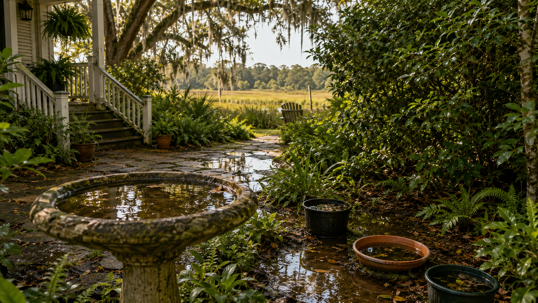
A small container on your property may produce mosquitoes, but so can water in a neighboring yard, roadside ditch, storm drain, wetland, tree cavity, or poorly draining landscape area.
This is why mosquito activity may return even when you are careful about removing water from your own property. Your yard is part of a larger environment, and mosquitoes do not remain within property lines.
For more information about Savannah’s coastal mosquito pressure, read Where Are All the Mosquitoes in Savannah Coming From?.
New Mosquitoes May Already Be Developing Nearby
All mosquitoes need water during their immature stages, but they do not all use the same types of water.
Some species develop in permanent or semi-permanent water sources. Others use temporary containers and small pockets of rainwater. Depending on the species, a mosquito breeding site may be as obvious as a neglected bucket or as easy to miss as a bottle cap, clogged gutter, plant saucer, folded tarp, drainage pipe, tree hole, or water trapped beneath yard debris.
Removing standing water is one of the most effective ways to reduce mosquito development. However, it is difficult to find and eliminate every possible source, especially in neighborhoods where water may be present on multiple properties.
If water cannot be drained, an appropriate larvicide may be used to target mosquito larvae before they become biting adults. This is one reason effective mosquito control should include both an inspection of the property and attention to water sources, rather than focusing only on the mosquitoes already flying around the yard.
Adult Mosquitoes Spend Time Resting in Vegetation
Mosquitoes do not fly continuously throughout the day. Many spend time resting in cool, humid, protected areas between periods of activity.
Dense shrubs, groundcover, shaded plant beds, areas beneath decks, and the undersides of leaves can provide suitable resting places. Savannah properties with mature landscaping, live-oak shade, and limited air movement may offer many of these protected areas.
Our professional Buzz-Off mosquito treatment focuses on the locations where adult mosquitoes are likely to rest, rather than simply spraying open lawn areas.
Thorough coverage matters because mosquitoes hidden inside dense foliage may not be exposed if the application only reaches the outside of the plants. It is also important to avoid flowering plants where bees and other pollinators may be actively foraging.
Mosquitoes Can Move in From Beyond Your Yard
Even if a treatment reduces the mosquitoes resting on your property, additional mosquitoes may arrive from nearby areas.
The distance a mosquito travels depends on its species. Some container-breeding mosquitoes tend to remain relatively close to where they developed, while mosquitoes associated with marshes and floodwater habitats may travel farther.
For Savannah homeowners, this means mosquito pressure is not always entirely produced within the treated yard. Nearby wetlands, drainage areas, unmanaged vegetation, and neighboring properties can continually contribute new mosquitoes.
Professional treatment cannot control every habitat surrounding your home. Its purpose is to make your property a less favorable place for mosquitoes to rest, breed, and remain active.
Weather and Property Conditions Continue to Change
Your yard does not remain the same after a mosquito service.
Rain may refill containers and low areas. Leaves may clog a gutter that was previously draining. Irrigation systems may create persistently damp spots. Plants continue growing and may produce new shaded resting areas. Toys, tarps, equipment, and outdoor containers may also collect water between visits.
Because conditions change, mosquito inspections should not be treated as a one-time task. Homeowners should continue checking the property regularly, especially after rain.
Common areas to inspect include:
Gutters and downspout extensions
Birdbaths and decorative fountains
Plant saucers and outdoor containers
Tarps, pool covers, and grill covers
Children’s toys and outdoor play equipment
Wheelbarrows, boats, and utility trailers
French drains and drainage pipes
Low areas beneath decks and porches
Water collected in yard debris
Pet bowls and other outdoor water containers
Emptying and refreshing appropriate water sources at least once each week can interrupt development before many mosquitoes reach adulthood.
Why Recurring Treatment Is More Effective Than a One-Time Spray
Mosquito control works best as an ongoing process because mosquitoes continue emerging and moving through the environment.
Recurring treatment helps reduce new adult mosquitoes before the population returns to its previous level. It also provides repeated opportunities to inspect the property, identify new standing-water sources, and adjust the application as vegetation and mosquito pressure change.
Torpedo Mosquito’s traditional treatment schedule generally follows a 21-day cycle. This timing is designed to maintain coverage while responding to the continued emergence of mosquitoes in Savannah’s warm climate.
A one-time treatment may be useful before an outdoor event or to provide temporary relief. However, it should not be expected to provide season-long control when breeding and migration continue throughout the surrounding area.
The Most Effective Approach Targets More Than Adult Mosquitoes
The EPA and University of Georgia Extension recommend integrated mosquito management. This approach uses several complementary methods instead of relying on a single product or application.
Around a residential property, that may include:
Removing standing water whenever possible
Treating water that cannot be drained with an appropriate larvicide
Targeting adult mosquito resting areas
Maintaining window and door screens
Monitoring the property as conditions change
Using personal repellent when additional protection is needed
Repeating treatments as new mosquito populations emerge
Each step addresses a different part of the problem. Removing water helps prevent development. Larvicides target immature mosquitoes. Adult treatments reduce mosquitoes that are already flying or resting around the property.
This combined approach is more effective than repeatedly treating visible adults while allowing nearby breeding sources to remain active.
What Homeowners Can Do Between Treatments
Professional mosquito control works best when homeowners also reduce the conditions mosquitoes use.
Walk around your property after rainfall and empty anything holding water. Keep gutters clear, maintain pools, correct drainage problems where possible, and thin extremely dense vegetation near patios and other frequently used areas.
Outdoor fans can also help around porches and seating areas. Mosquitoes are relatively weak fliers, and moving air can make it more difficult for them to approach and land.
When spending time outside, use an EPA-registered insect repellent and follow the product label. Repellent provides personal protection, while yard treatment works to reduce the overall mosquito population around the property.
When a Misting System May Be Appropriate
Some Savannah properties experience continuous mosquito pressure because of dense landscaping, nearby marshes, drainage areas, or outdoor spaces that are used frequently.
For these properties, an automated mosquito misting system may provide more frequent protection than periodic backpack treatments alone.
A professionally designed misting system places nozzles around selected outdoor areas and releases a measured application on a programmed schedule. The system can be designed around patios, pools, landscaped areas, and other places where mosquito pressure is most disruptive.
Misting systems still work best when standing water and breeding habitats are addressed. They are another component of mosquito management, not a replacement for property maintenance.
Consistency Matters in Savannah Mosquito Control
Mosquitoes returning after a treatment does not necessarily mean the service failed. It usually means new mosquitoes have emerged, moved in from nearby habitats, or found new places to rest as conditions changed.
Savannah’s climate and coastal environment allow mosquito populations to rebuild quickly when control efforts stop. Consistent treatment helps interrupt that rebuilding process and keeps the population lower throughout the season.
Torpedo Mosquito provides customized mosquito and gnat control for Savannah homes and businesses. Our services include recurring backpack treatments, larval control, organic treatment options, and automated misting systems.
If mosquitoes keep returning to your property, contact our Savannah mosquito-control team for a customized quote.
Frequently Asked Questions
Why did mosquitoes return after my yard was treated?
New mosquitoes may have emerged from nearby standing water or moved into the yard from surrounding properties, drainage areas, wetlands, and vegetation. A treatment reduces exposed mosquitoes but cannot permanently prevent new mosquitoes from entering the property.
How quickly can new mosquitoes develop?
Development time varies by species, temperature, food, and environmental conditions. Under warm, favorable conditions, the larval and pupal stages can be completed relatively quickly, allowing new adults to emerge within days.
Does rain make mosquito treatments stop working?
Rain can create new breeding habitats by filling containers and low areas with water. The effect of rain on a treatment depends on the product, how long it had to dry, the application site, and the amount and timing of rainfall. The product label and the service provider’s instructions should determine whether reapplication is needed.
How often should I check my yard for standing water?
Inspect your property at least once each week and after significant rainfall. Empty containers, refresh birdbaths, clear gutters, and correct drainage problems wherever possible.
Is one mosquito treatment enough for an outdoor event?
A one-time treatment may provide temporary relief for an event, but results depend on timing, weather, surrounding mosquito pressure, and property conditions. It should not be expected to provide the same ongoing control as a recurring service.
Why are mosquito treatments usually scheduled every 21 days?
A recurring schedule helps maintain protection as residual coverage declines and new mosquitoes emerge or enter the yard. Torpedo Mosquito’s traditional Savannah service generally follows a 21-day treatment cycle.
Will recurring treatment eliminate every mosquito?
No mosquito-control service can guarantee that every mosquito will be eliminated, particularly in coastal areas surrounded by wetlands, drainage systems, and neighboring properties. The goal is to substantially reduce the population and make the yard more comfortable to use.
What should I do if mosquitoes are still active between visits?
Check the yard for newly collected water and make sure access conditions have not changed. Torpedo Mosquito also provides an Itch-Free Guarantee and can evaluate whether a follow-up treatment is appropriate.