
5 Hidden Places Mosquitoes Start Breeding Around Charleston Homes in Early Spring
As Charleston starts warming up in early spring, many homeowners notice something frustrating. One warm afternoon arrives, people head outside to enjoy their yard, and suddenly the mosquitoes are back.
It can feel like they appear overnight.
In reality, mosquitoes begin breeding weeks before anyone notices them. Mosquito eggs overwinter in dry protected areas and early spring rain, mild temperatures, and small pockets of standing water create the perfect conditions for eggs to hatch. Around Charleston homes, many of these breeding spots are surprisingly small and easy to overlook.
Don't wait until you're swatting. Contact us today for a consistent, guaranteed mosquito control solution.
Here are five hidden places mosquitoes often start multiplying in early spring.
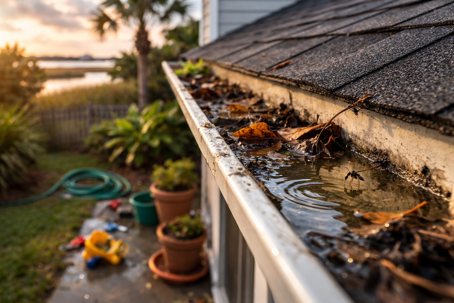
1. Clogged Gutters After Winter
Charleston winters are mild, but leaves and debris still build up in gutters throughout the season. When spring rain arrives, clogged gutters can hold small pools of water for days or even weeks.
That stagnant water becomes an ideal place for mosquitoes to lay eggs. Because gutters sit above eye level, many homeowners never realize they’re holding water.
Even a small amount of trapped water can support hundreds of mosquito larvae. Cleaning gutters early in the spring is one of the simplest ways to eliminate a hidden mosquito breeding site before mosquito populations grow.
Learn more about how mosquitoes overwinter and survive to spring.
2. Boat Covers, Tarps, and Outdoor Covers
Living in a coastal city means many Charleston homes have boats, jet skis, grills, or patio furniture covered with tarps or protective covers.
These covers almost always sag slightly in the middle. After a rainstorm, that sagging area fills with water and can stay there for days.
Mosquitoes love these spots because they are protected from wind and sunlight. Homeowners may walk past them every day without realizing a shallow puddle has formed.
Dumping out pooled water from covers regularly during spring can significantly reduce mosquito activity around the yard.
3. Outdoor Toys, Planters, and Yard Containers
Early spring is when kids’ toys, buckets, and gardening supplies start coming back outside. Unfortunately, anything that can hold water can become a mosquito nursery.
Common offenders include plastic playsets, toy trucks, plant saucers under flower pots, watering cans, decorative containers, and unused buckets.
Mosquitoes only need a very small amount of water to reproduce. Even a container the size of a bottle cap can support larvae.
Taking a few minutes to walk through the yard after rain and empty small containers can prevent dozens of breeding sites from forming.


4. Irrigation Boxes and Drainage Areas
Many Charleston homes have irrigation systems installed underground. The valve boxes that protect irrigation components sometimes collect water, especially after heavy rain.
Because these boxes are buried and out of sight, they can hold standing water for long periods without anyone noticing.
Drainage areas and low landscape spots can also trap water during the rainy spring months. Mosquitoes are extremely efficient at finding these quiet, hidden water sources.
5. Low Spots in the Lawn
Charleston’s combination of sandy soil and coastal rain patterns can create shallow puddles in lawns that linger longer than expected.
Areas where grass dips slightly can hold just enough water for mosquito eggs to hatch. These puddles may disappear within a day or two, but that’s often long enough for mosquito larvae to develop.
Filling in low spots, improving drainage, and keeping lawns properly graded can help reduce these temporary breeding areas.
How Torpedo Mosquito Reduces Breeding Sites Around Your Property
At Torpedo Mosquito, one of the most important parts of our mosquito control program is identifying and reducing mosquito breeding sites around your yard. When our technicians service a property, they look for the same types of hidden water sources that commonly appear around Charleston homes in early spring.
If standing water can be removed, we empty it whenever possible to eliminate the breeding site. Something as simple as dumping water from a tarp, container, or low spot in the yard can prevent hundreds of mosquitoes from developing.
In areas where water can’t be removed, or where it is likely to collect again after rain, we apply a natural larvicide. These treatments target mosquito larvae in the water before they have a chance to mature into biting adults.
This approach is part of an integrated pest management strategy that focuses on reducing mosquito populations at the source. By identifying and treating breeding areas around the property, we help lower the overall mosquito population before it has the chance to explode.
However, in a coastal city like Charleston, it’s nearly impossible to effectively eliminate mosquitoes through breeding ground management alone. Salt marshes, drainage ditches, wooded areas, and even neighboring properties can all produce mosquitoes that eventually make their way into nearby yards.
That’s why our mosquito control program also includes targeted perimeter treatments that reduce adult mosquitoes where they rest around your property. When perimeter treatments are combined with breeding ground management, it creates a much more effective defense and helps homeowners enjoy a significantly more bite-free yard.
Why Mosquitoes Still Show Up Even If You Remove Standing Water
Eliminating water around your yard is one of the best first steps toward reducing mosquitoes. However, in coastal areas like Charleston, mosquitoes don’t only come from your own property.
Many species breed in nearby marshes, wooded areas, and tidal pools. Once they hatch, they can travel into neighborhoods in search of people and pets.
That’s why homeowners sometimes notice mosquitoes even after cleaning up standing water around their yard.
FAQs
Why do mosquitoes appear so early in Charleston?
Charleston’s mild winters allow some mosquito species to survive year-round. Once temperatures begin warming in early spring, mosquito activity can increase quickly.
How fast do mosquitoes breed?
Mosquitoes can develop from egg to adult in as little as 7–10 days when temperatures are warm.
Can removing water eliminate mosquitoes completely?
Removing standing water helps reduce breeding sites, but mosquitoes can still travel into your yard from nearby properties or natural areas.