
A Misting System is a Delivery System, Not a Magic Tank
Automated mosquito misting systems use a reservoir, pump, tubing, controller and a series of small nozzles placed around an outdoor space. At scheduled times, the system sends a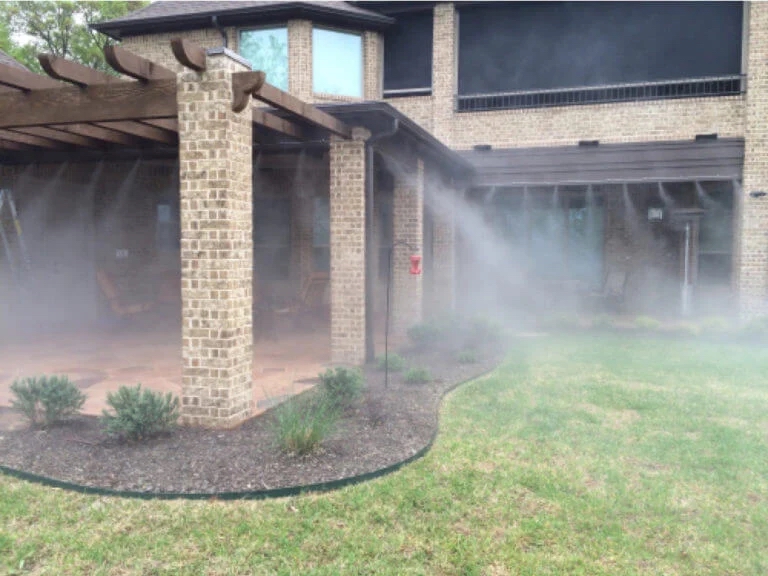 measured fine mist through those nozzles. The goal is to reach the places adult mosquitoes move through or rest, not to soak the lawn.
That distinction matters in Granbury, where properties may include patios, pools, fences, detached shops, animal areas and large transitions between open sun and shaded landscaping. A well-designed system follows the usable space and mosquito habitat. A poorly designed one may simply release product where wind carries it away.
The system targets adult mosquitoes; it does not prevent eggs or larvae from developing in standing water. That is why drainage, container checks and larval control remain part of an effective plan even when a property has automated equipment.
If mosquito activity is already affecting your yard, request a local inspection and quote.
Nozzle Placement Determines What the System Actually Protects
Nozzles are commonly installed along fence lines, roof edges or landscaping around the perimeter of the target area. They should point toward the intended treatment zone and away from eating areas, air intakes, neighboring property and water such as pools, ponds and stock tanks. The EPA’s guidance for residential mosquito misting systems recommends placing nozzles below ten feet when possible to reduce drift.
More nozzles are not automatically better. The layout should account for distance, pressure, obstacles and prevailing wind. A technician also needs to identify gaps created by gates, corners, changes in elevation and separate seating areas.
Timing and Calibration Matter as Much as Hardware
Many systems use programmed cycles, but the schedule should match pest activity and the pesticide label. The EPA advises against operation during high wind, rainfall, fog or temperatures below 50 degrees, and when people, pets or food are present. Wind, rain and motion sensors can help prevent unnecessary applications.
Calibration confirms that the equipment is delivering no more than the labeled rate. This is not a set-it-and-forget-it detail. Nozzles can clog, tubing can leak and landscaping can grow into the spray path. Routine inspection keeps the system aimed and operating as designed.
What Monthly Maintenance Should Include
Maintenance should include checking the reservoir, filters, pressure, controller, tubing and every nozzle. The technician should correct leaks, clean or replace clogged components, confirm spray direction and adjust the layout as landscaping or outdoor use changes. Product selection and refill rates must follow the exact label for use in a misting system.
A system also works best as one layer of mosquito management. Dumping standing water, maintaining drainage and addressing larvae reduce the number of new mosquitoes the system has to confront. The EPA and public-health agencies recommend this integrated approach rather than relying on one tactic alone. Homeowners comparing options can also review what to expect from a professional mosquito-control visit.
Is a Mosquito Misting System Right for a Granbury Property
Misting systems are often most useful where outdoor areas are used frequently and consistent coverage is the priority. The right recommendation depends on the property layout, surrounding habitat, water features, animals and how the space is used. Smaller or simpler yards may be well served by recurring backpack treatments instead.
Learn more about automated mosquito misting systems or request a Granbury property assessment. A site visit allows the layout, nozzle count and maintenance needs to be based on the actual property rather than a generic package.
Frequently Asked Questions
How often does a mosquito misting system spray?
The schedule varies by product label, property conditions and pest activity. It should be programmed and calibrated by a qualified professional.
Can a misting system spray near a pool or pond?
Nozzles should be directed away from water bodies and pools. Some commonly used ingredients are highly toxic to fish and aquatic organisms.
Do misting systems replace standing-water control?
No. Source reduction and larval control remain important parts of an integrated mosquito plan.
Do mosquito misting systems require maintenance?
Yes. Tanks, pumps, tubing, nozzles and controls need routine inspection, refilling and adjustment.