
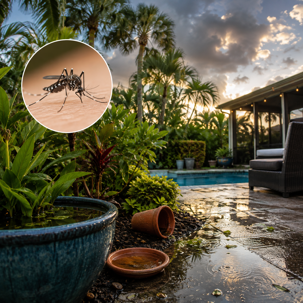
Why Are Mosquitoes So Bad in Tampa Right Now?
If mosquitoes seem especially relentless around Tampa right now, you are not imagining it. Late August is already one of the most active times of year for mosquitoes in Central Florida, and this summer's combination of frequent rain, warm temperatures, and consistently humid conditions has given mosquito populations everything they need to thrive.
A hurricane does not have to pass through Tampa for mosquito numbers to climb. In fact, ordinary summer rainfall can be more than enough. Tampa has received significant rainfall this August while temperatures have remained very warm throughout the month. That combination creates new breeding habitat while allowing mosquito larvae to develop quickly and adult mosquitoes to stay active.
For homeowners throughout Tampa, Brandon, Riverview, Apollo Beach, Westchase, and surrounding communities, that can translate into a noticeable increase in mosquito activity around patios, pools, lanais, gardens, and shaded areas of the yard.
Tampa Doesn't Need a Hurricane to Have a Mosquito Boom
Hurricanes certainly can create mosquito problems, but they are only one source of excess water. Tampa's normal summer weather already produces frequent thunderstorms, heavy downpours, and periods of high humidity.
Each storm can leave behind small amounts of standing water in places throughout a residential property. A flowerpot saucer, clogged gutter, children's toy, tarp, drainage area, or low section of the yard may hold water long enough for mosquitoes to reproduce.
When that moisture is paired with Tampa's late-summer heat, mosquito development can happen quickly. According to the CDC's information on the Aedes mosquito life cycle, some Aedes mosquitoes can develop from egg to adult in just 7 to 10 days under favorable conditions.
That is why homeowners can experience a significant mosquito surge even during a summer without a major tropical system affecting the area.
Why Mosquito Numbers Can Keep Rising After the Rain Stops
One of the most confusing things about mosquito activity is that the worst pressure may appear several days after a rainstorm rather than while the rain is actually falling.
Mosquitoes develop through several stages in water before emerging as flying adults. Once new standing water becomes available, eggs can hatch and larvae begin developing. Under warm conditions, some common mosquito species can complete their development from egg to adult in roughly a week.
By the time homeowners notice a sudden increase in biting mosquitoes, the puddle or container where they developed may already be dry.
This delayed response is one reason mosquito populations sometimes appear to explode "out of nowhere." The conditions that created the problem may have occurred a week earlier.
Tampa homeowners interested in finding some of the less obvious sources around their property can also read our guide to how standing water in Tampa's urban landscapes drives mosquito populations.
Tampa's Landscaping Gives Adult Mosquitoes Somewhere to Hide
Standing water creates mosquitoes, but it is not necessarily where adult mosquitoes spend most of their day.
Tampa yards often include palms, hedges, tropical shrubs, ornamental grasses, dense groundcover, and heavily landscaped pool areas. Those plants create cool, shaded, humid environments that protect mosquitoes from direct sunlight and Florida's midday heat.
Common resting areas include:
Dense shrubs and hedges
Shaded fence lines
Palm and tropical landscaping
Groundcover and thick vegetation
Areas beneath decks and lanais
Vegetation surrounding pools
Damp areas near drainage systems
Shaded portions of the property that receive little direct sun
This is why simply eliminating one bucket of standing water does not immediately remove the adult mosquitoes already living around the property.
Neighborhood Water Sources Matter Too
A homeowner can do everything correctly and still experience mosquitoes.
Tampa neighborhoods often contain retention ponds, drainage ditches, stormwater systems, canals, wetlands, and heavily irrigated landscaping. Mosquitoes developing outside one property can move into surrounding yards.
That is particularly important in suburban communities throughout Hillsborough County where stormwater management systems and retention ponds are common parts of neighborhood design.
Removing standing water around your own home is still one of the most important mosquito prevention steps you can take, but it cannot control every mosquito source in the surrounding environment.
Waterfront and coastal properties can face additional mosquito pressure because of their proximity to canals, marshes, retention areas, and other aquatic habitats. We've covered those challenges in more detail in our guide to mosquito problems around Tampa waterfront homes.
Even Hillsborough County Is Treating for High Mosquito Activity
The current mosquito pressure is not limited to a handful of backyards.
In August, Hillsborough County Mosquito Management Services conducted aerial mosquito treatments in areas including Seminole Heights, Tampa Heights, East Tampa, and Brandon to control adult mosquito populations.
Earlier in the month, the county also conducted aerial treatments around Tampa Heights and Seminole Heights. These community-level treatments are another indication that elevated mosquito activity is being actively addressed across portions of Hillsborough County this August.
Large-scale mosquito control programs help reduce regional mosquito populations, but they serve a different purpose than residential mosquito treatments. County programs address mosquitoes across broad areas, while residential service focuses specifically on mosquito activity and resting habitat around an individual property.
What Tampa Homeowners Can Do Right Now
When mosquito numbers are high, prevention works best when several strategies are used together.
Take a few minutes after significant rain to walk around your property and look for anything holding water. Dump containers whenever possible, clear clogged gutters, refresh birdbaths regularly, and make sure drainage areas are functioning properly.
Pay particular attention to places that are easy to overlook. Grill covers, pool toys, plant trays, tarps, buckets, outdoor storage containers, and even folds in patio furniture covers can retain enough water to become mosquito habitat.
It is also helpful to keep landscaping maintained. Trimming dense vegetation and preventing areas from becoming excessively overgrown reduces some of the protected resting habitat adult mosquitoes use during the day.
Why Mosquito Treatments Matter During a Population Surge
When mosquito pressure becomes particularly heavy, homeowners are often dealing with more than one breeding source.
There may be mosquitoes developing on the property, adult mosquitoes resting in landscaping, and additional mosquitoes continually entering the yard from surrounding neighborhood sources. Treating only one component may provide temporary improvement without addressing the larger problem.
At Torpedo Mosquito, our residential mosquito treatments focus on the areas mosquitoes actually use around the property. We target shaded vegetation and other common resting areas while also looking for potential breeding sites that may be contributing to mosquito activity.
Regular treatments are particularly valuable during periods of heavy mosquito pressure because they help keep populations lower over time rather than allowing mosquitoes to rebuild between isolated DIY applications.
And because Tampa's warm climate supports mosquitoes for much of the year, mosquito management is less about waiting for a traditional "season" to end and more about responding to the conditions outside.
Frequently Asked Questions About Tampa Mosquitoes
Why are mosquitoes so bad in Tampa right now?
Late-summer heat, frequent rainfall, high humidity, standing water, and abundant vegetation all contribute to heavy mosquito activity around Tampa. August's conditions have created additional breeding habitat while warm temperatures allow mosquitoes to develop rapidly. Hillsborough County has also conducted mosquito control treatments in multiple areas this month, demonstrating that elevated mosquito populations are not limited to individual properties.
Do mosquitoes get worse after normal thunderstorms?
Yes. A hurricane is not necessary to create a mosquito surge. Ordinary summer thunderstorms can leave standing water throughout yards, neighborhoods, drainage systems, and natural areas. When temperatures remain warm, that water can support new generations of mosquitoes.
How long after rain do mosquitoes become worse?
Homeowners may notice increased mosquito activity roughly a week or more after significant rainfall, although timing varies by mosquito species and environmental conditions. The CDC reports that Aedes mosquitoes can develop from egg to adult in approximately 7 to 10 days, which helps explain why mosquito activity can suddenly increase days after a rainy stretch.
Why do I have mosquitoes if there is no standing water in my yard?
Mosquitoes may originate from neighboring properties, retention ponds, drainage areas, wetlands, canals, or other nearby sources. Adult mosquitoes can also remain hidden in shaded landscaping even after the water where they developed is gone.
Can professional mosquito treatment help when mosquito populations are unusually high?
Professional treatment can help reduce adult mosquito populations around residential properties by targeting common resting areas and addressing breeding sites when possible. Consistent service is especially helpful during periods when new mosquitoes are continually emerging or moving into the property from surrounding areas.
Don't Let Late-Summer Mosquitoes Take Over Your Yard
August mosquito pressure in Tampa can be frustrating, but it is not random. Warm temperatures, rainfall, humidity, and abundant mosquito habitat have all come together to create favorable conditions.
Homeowners can help by eliminating standing water, maintaining landscaping, and paying attention to areas that stay damp after storms. When mosquito populations remain heavy despite those efforts, professional mosquito control can provide another layer of protection.
Torpedo Mosquito provides residential mosquito control throughout the Tampa area with treatments designed around the way mosquitoes actually breed, rest, and move through Florida properties. When mosquitoes are making it difficult to enjoy your pool, patio, or backyard, consistent treatment can help bring the pressure back under control.