
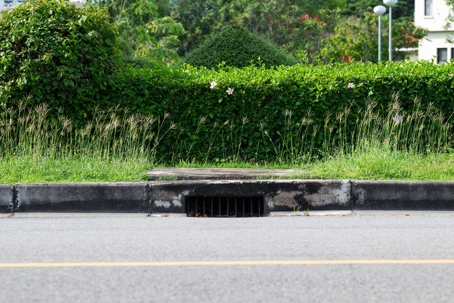
Savannah’s Drainage Network is Part of the Mosquito Story
Around Savannah, Wilmington Island, Pooler and Richmond Hill, storm drains and roadside ditches are essential for moving rain away from neighborhoods. When those systems flow properly, they help water leave. When leaves, sediment or vegetation slow that movement, isolated pockets may remain after the surrounding ground looks dry.
That distinction matters because mosquito larvae need water, but they do not need a pond. University of Georgia Extension lists roadside ditches and water standing in drainage systems among common larval habitats. Chatham County Mosquito Control has used ditch construction and maintenance as part of physical mosquito control for decades.
If mosquito activity is already affecting your yard, request a local inspection and quote.
Why the Nearest Ditch May Not be the Only Source
A wet ditch can be easy to blame because it is visible. The mosquito biting on a porch may instead have developed in a planter, French drain, corrugated pipe or container only a few yards away. Chatham County notes that during dry periods, localized complaints often point to artificial-container species rather than a large regional hatch.
Mosquito larvae live below the water surface but regularly come up to breathe. Moving water is generally less suitable than quiet, isolated pockets, which is why a flowing ditch and a clogged section of the same ditch can present very different conditions.
Asian tiger mosquitoes are a useful example. They commonly develop close to homes and usually travel much shorter distances than salt-marsh species. If black-and-white mosquitoes are biting during the day, the source may be on the property or a neighboring lot rather than miles away.
What Homeowners Can Safely Inspect
Check the private side of the drainage system first: roof gutters, downspout extensions, yard drains and any swale or ditch that you are responsible for maintaining. Remove ordinary yard debris only where it is safe and permitted. Never enter a storm drain, move public infrastructure or apply a pesticide to public water.
After rain, watch how long water remains. Chatham County warns that a container holding water for more than five days can produce adult mosquitoes. Photos and dates can help when reporting a blocked public drain or persistent roadside problem to the appropriate local department.
Why Integrated Control Works Better Than One Tactic
Savannah has more than 40 documented mosquito species, and they do not all use the same habitat. Marsh communities can receive mosquitoes from outside individual yards, which is why surveillance, drainage, larval control and adult control each have a role. At home, the same principle applies: improve drainage, remove small containers and address the shaded places where adults rest.
This layered approach also helps explain why mosquitoes can return after a single treatment. New adults may continue emerging or moving in even after the population already on the property has been reduced.
Mosquito control in Savannah can supplement municipal work by focusing on the private property where your family actually spends time. For help identifying the pressure around your yard, request a quote.
Frequently Asked Questions
Do Savannah storm drains breed mosquitoes?
They can if pockets of stagnant water remain, but a functioning drain that moves water is different from a blocked or isolated pool.
Who handles mosquito control in Chatham County?
Chatham County Mosquito Control conducts surveillance and area-wide control. Private property conditions still require attention from the owner.
Can I treat a roadside ditch myself?
Do not apply pesticides to public drainage or water. Report the condition to the responsible local agency.